|
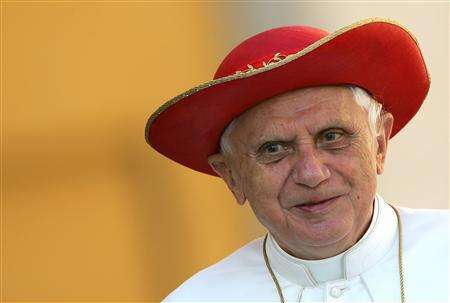
| Cardinal Joseph Ratzinger in Rome (Sant'Uffizio). (Photo credit: Wikipedia) |
Suppose instead that the person at the top decides to ignore the reports, look the other way, and try to sweep the whole thing under the rug. In such a case, we are likely to view him or her as sharing at least some of the blame for the continued bad behavior of his or her subordinates.
Maureen Dowd wrote a good Op-Ed in the New York Times this weekend on the subject of Pope's involvement in concealing child sexual abuse by Catholic priests. It is good to see more and more people speaking out against this man, his church, and the atrocities that continue to surface.
Now we learn the sickening news that Cardinal Joseph Ratzinger, nicknamed “God’s Rottweiler” when he was the church’s enforcer on matters of faith and sin, ignored repeated warnings and looked away in the case of the Rev. Lawrence C. Murphy, a Wisconsin priest who molested as many as 200 deaf boys.




 I realize that what I experience as an atheist living in Mississippi is a bit different from what those of you in more enlightened areas experience. My experience here shapes how I view the world, and there is simply no getting around that fact. But I've found myself thinking lately that I want to be more than a passive recipient of my environment; I want to shape it as well. I'm going to look at atheist t-shirts, vehicle emblems, and the like as examples of what I'm talking about.
 I don't expect to see the end of Catholicism just yet; however, it is getting increasingly difficult for me to understand how any moral individual would want to continue to associate with this organization. With many child sexual abuse scandals already raging, the
 Why is there something rather than nothing? Many Christian apologists and theologians are fond of this question. Through some complicated mental gymnastics, they manage to convince themselves that the only answer to this question is "